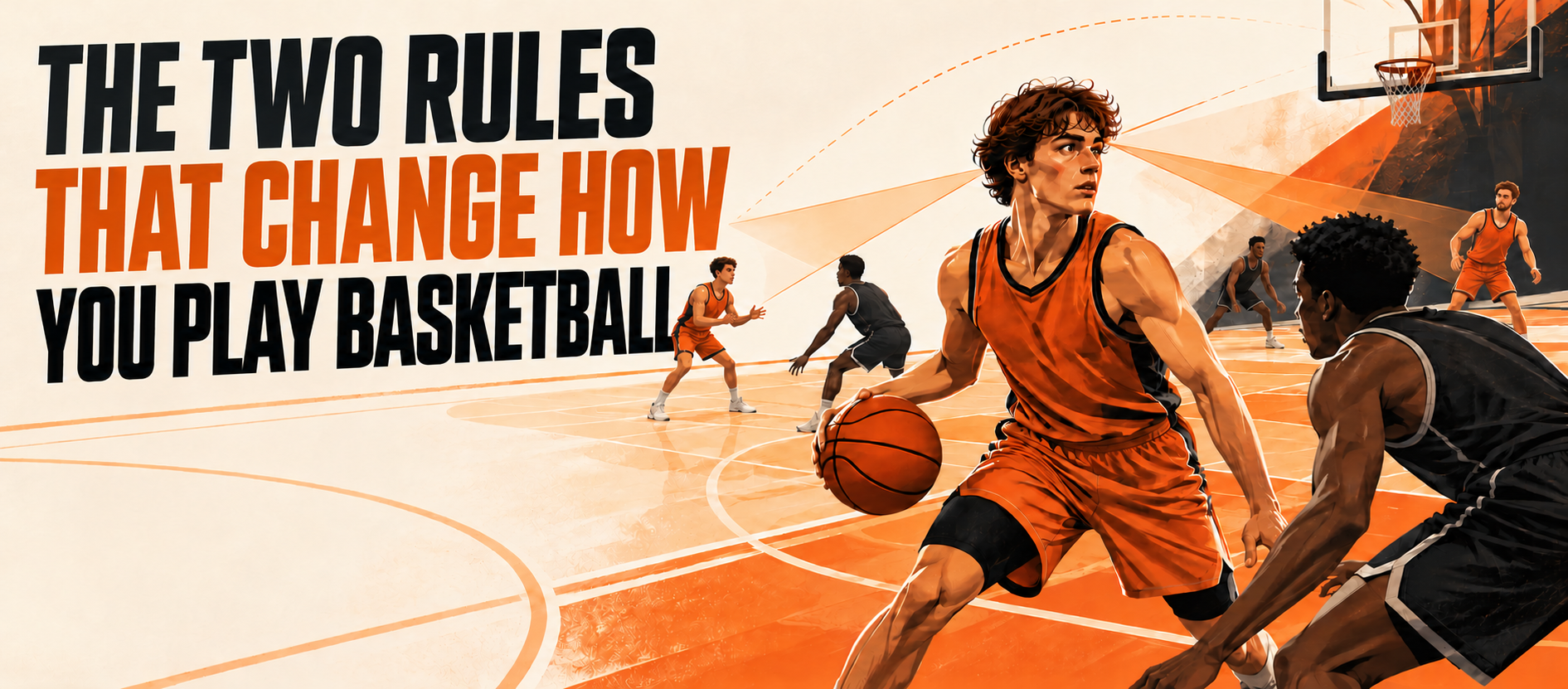
Players ask me what will make them better. Better shooting? Better ball control? A quicker pass or a higher jump? In my experience, the biggest improvement is often not another technique. It is learning what to look at. These are the two rules I start with.
Many coaches spend a lot of time teaching ball control. That matters. But controlling the ball is only one part of the game. To control the game, a player has to stay aware of everything happening around them: take in information, read what it means, and choose and carry out the right response. That is the foundation of my coaching philosophy. It may sound simple, but it reaches into every possession and every decision. To make it practical, I defined two basic rules.
Rule one: When you have the ball, look at the basket
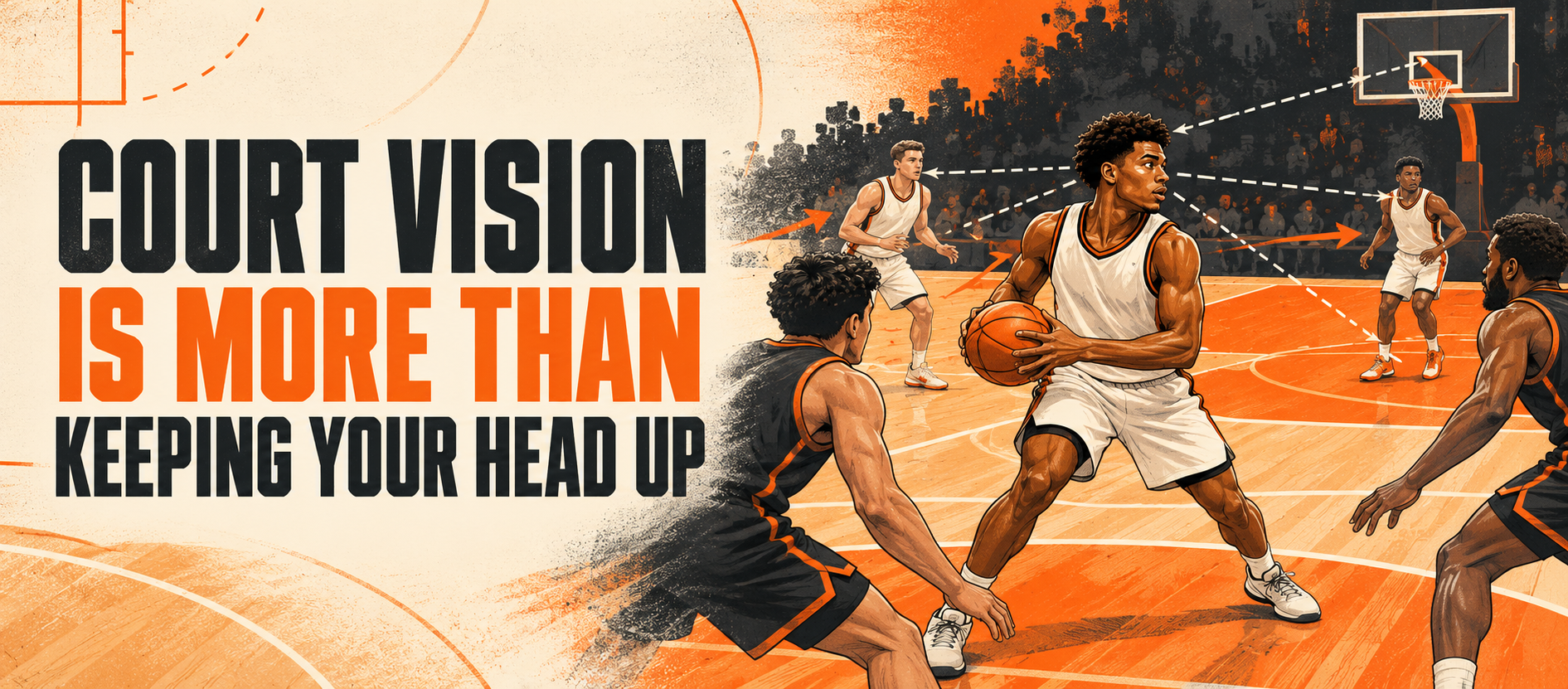
That does not mean shoot every time you touch it. It means lift your eyes, identify the rim, and see the floor between you and the rim. On the catch, coming off a rebound or advancing in transition, the basket gives your eyes a destination. Now you can recognize the cutter, the open teammate and the driving lane before your first dribble.
Rule two: Without the ball, look at the ball
On offense, never turn yourself into a target who cannot receive a pass. On defense, track the ball while remaining aware of your assignment. This is how you anticipate help, deflections, cuts and rebounds. If the ball moves and your eyes are a step late, your feet usually follow.
Coach it on every possession
Make these two rules visible during warmups, passing drills, scrimmages and transition work. Stop a rep when a player receives the ball looking down. Ask what was available before the first dribble. When the ball moves, ask every player if they saw it. Small habits become a team language.
Do not confuse looking at the basket with deciding to shoot. Vision comes first. The decision comes second.