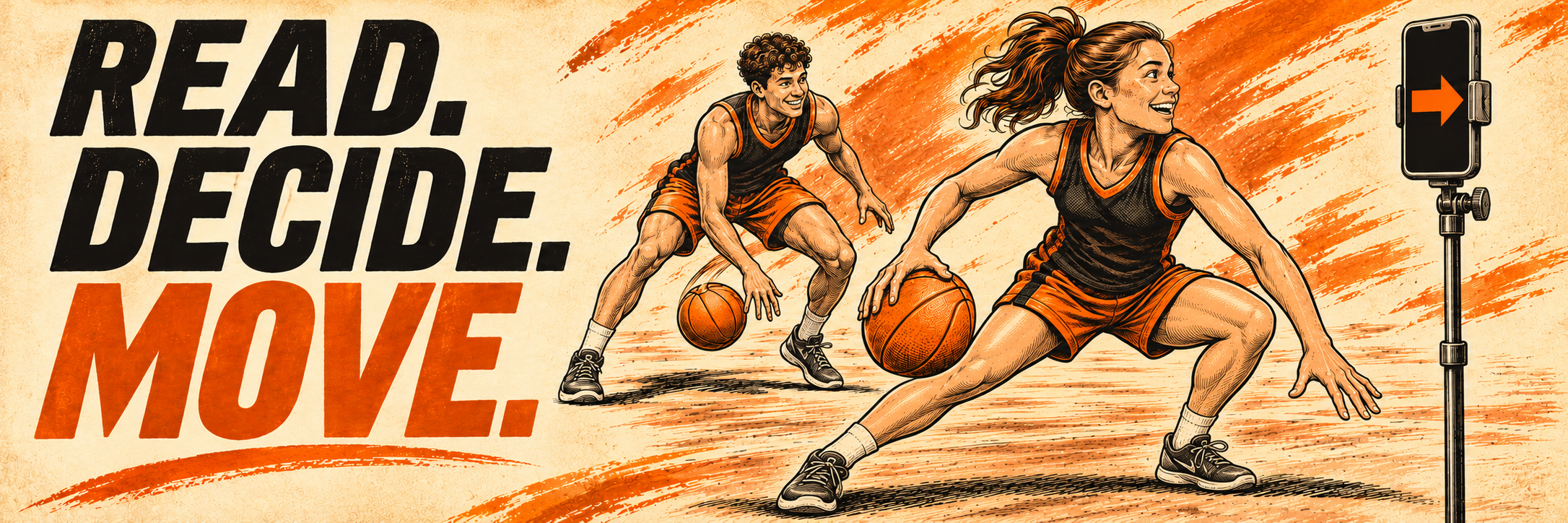
The player gets faster at a drill. Good. Now ask the next question: what changed when the defender moved?
I want practice to prepare an athlete for a basketball problem. A better score on a familiar cue task is one result. Using the right skill in an unfamiliar possession is another. We need to look for both.
Define the basketball problem first
Choose one observable target. For example: recognize a closeout and decide whether to shoot, drive, or pass. Describe a useful decision before adding the cue drill.
Use the same definitions when you observe practice later. If the success standard changes after you see the result, almost any session can look effective.
Separate three kinds of progress
First, improvement in the practiced task. The athlete may become more familiar with the symbols, timing, and movement.
Second, performance on a related but unpracticed task. Change the cue order or starting position while preserving the underlying demand.
Third, performance in a representative basketball situation with a defender and teammate. These comparisons help distinguish practice familiarity from a skill that remains useful in the game.
Use a practical before and after comparison
Before training, observe a short, defined live task. Keep starting locations, space, and defensive instructions consistent enough to compare. Record relevant opportunities, useful decisions, turnovers, and successful executions.
After the training block, repeat the same assessment conditions without displaying the app cues. Include unfamiliar defensive responses within those conditions so the athlete has to read the play.
This is a coaching check, not a controlled scientific trial. Fatigue, regular team practice, defensive behavior, and familiarity can affect the result. Record those factors before crediting a change to one drill.
Build a bridge from symbol to situation
A visual arrow creates a clear decision demand. A defender’s hips, approach angle, and distance supply different information. The player needs practice reading those features directly.
Move from a cue controlled action to a guided defender, then a defender with more freedom. Preserve the basketball objective while the source of information becomes more representative.
Check after a delay
An immediate improvement may reflect a good day or short term familiarity. Repeat the assessment after a planned interval and record what practice happened in between.
Judge the read and execution separately. A good pass can be dropped. A poor shot selection can go in. The final score should not erase the decision that produced it.
Bring one question into a live game
Coaching application: play a short three on three segment and watch only the chosen target. For the closeout example, note opportunities to attack an off balance defender or move the ball to an open teammate.
Film comparable segments when possible. Ask another coach to review the same clips using the same decision definitions. Small samples should guide the next practice question rather than become sweeping performance claims.
Use the answer to improve practice
If cue performance improves but live decisions do not, adjust the bridge. The symbol rule may be remote from the basketball information, or the athlete may need more guided live repetitions.
If both improve, keep testing new situations and after a delay. Ask what the athlete can now do when the drill is no longer there.
Related practice from REACT CRT
“Make each day your masterpiece.”
For related scientific evidence, see Cognitive Reaction Training: What the Research Supports.