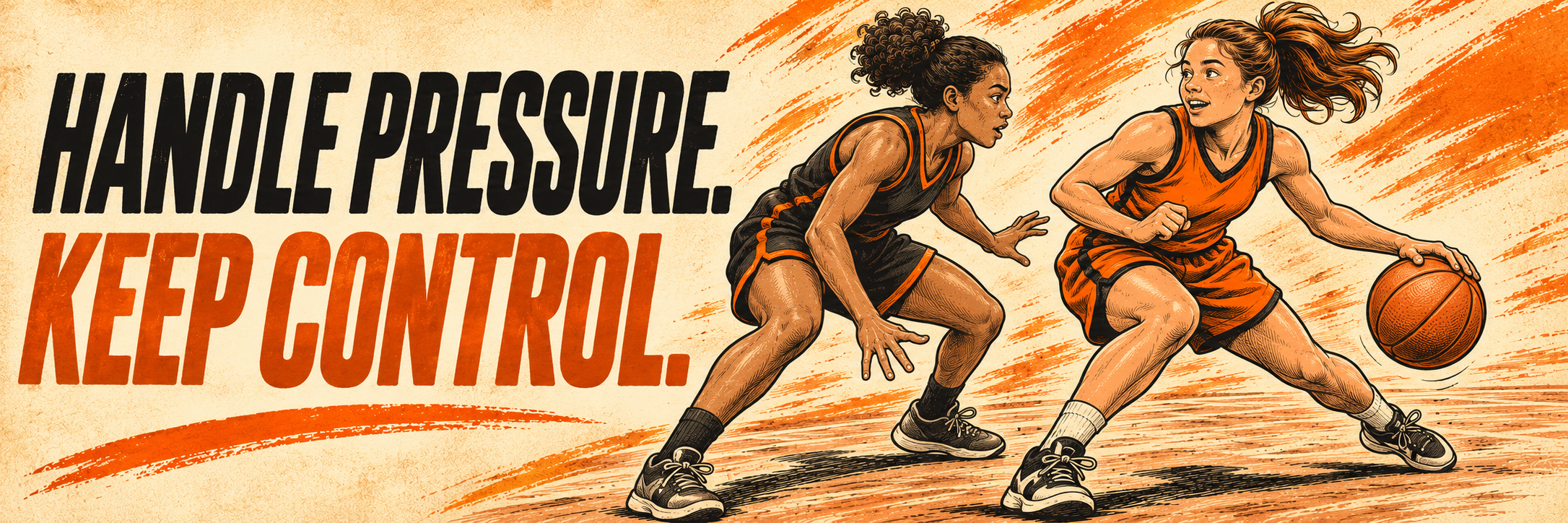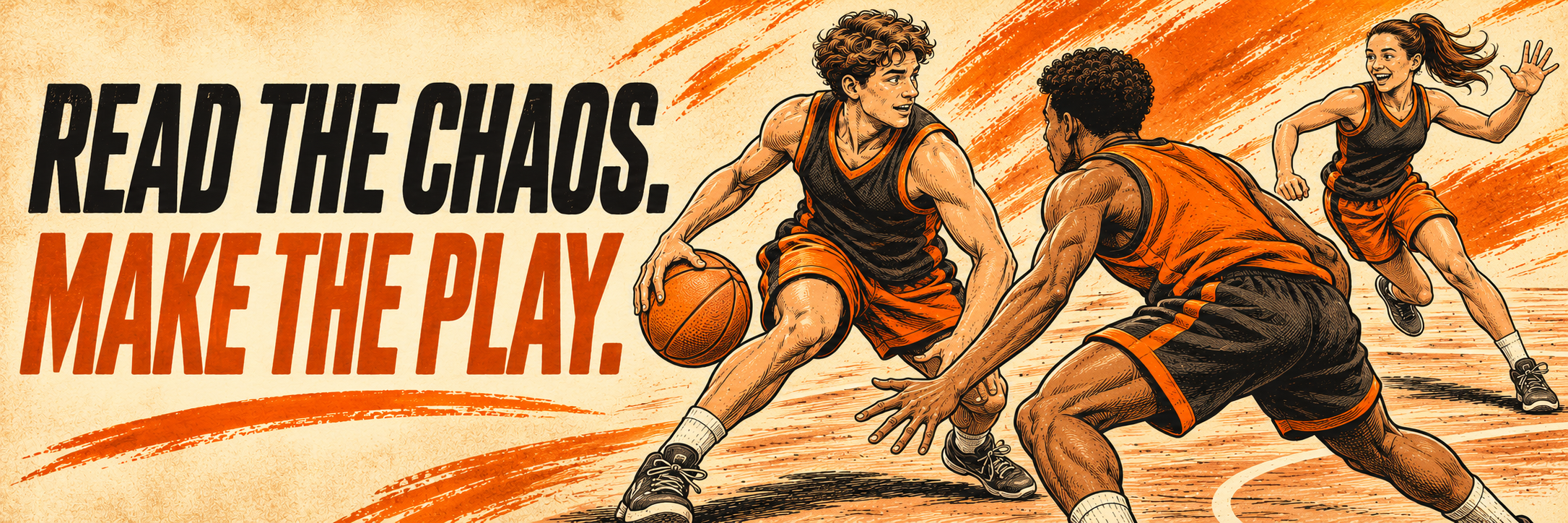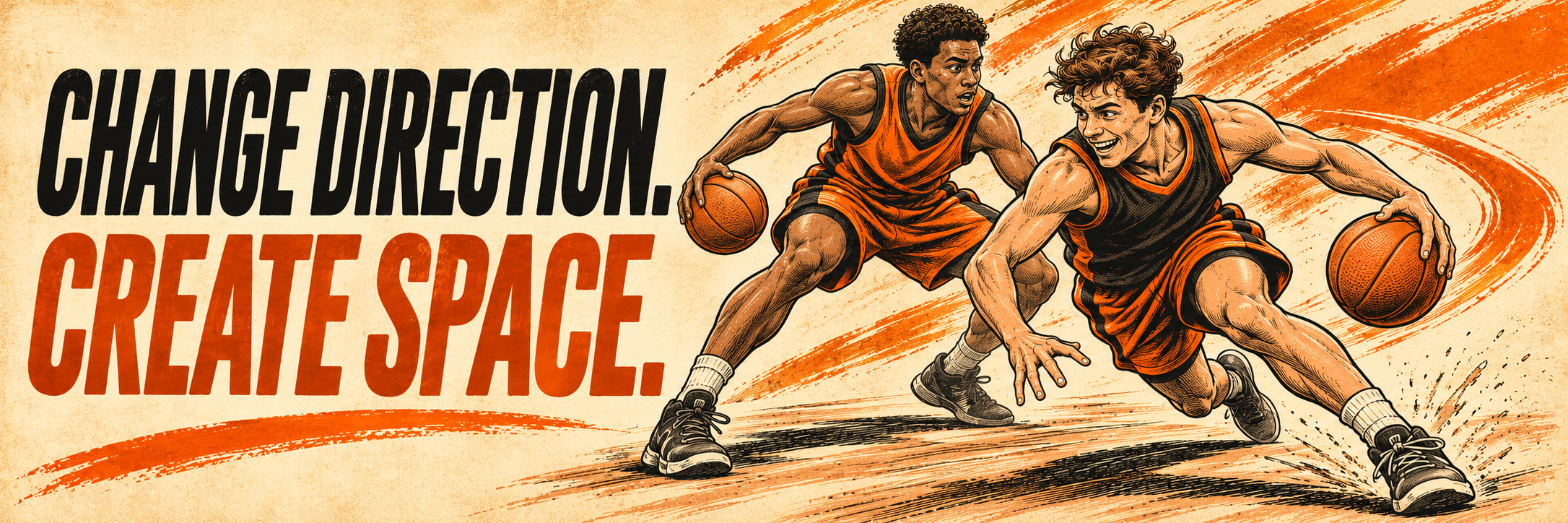
A change of direction starts before the ball changes hands. The shoulders, elbows, hand position, body height, and timing all shape the move.
I teach those pieces before asking a player to perform at speed. Then the move has to create an advantage against something that changes. A clean pattern is a beginning.
1. Build the crossover
Start in a balanced stance and direct the ball from one hand toward the other. Emphasize sending it to the receiving hand rather than casually shifting it across the body. Add the bounce, then add movement.
The hand directs the ball. The body changes angle and height with it. If the ball arrives before the player is ready to leave, the move has become a separate trick instead of part of the attack.
2. Prepare the move behind the back
Begin by controlling the ball forward and backward beside the body. Put the pushing hand where it can send the ball in the intended direction. Then learn the path behind the body at a manageable speed.
A wall can provide feedback: bounce the ball behind the back toward the wall and receive the return under control. Leave enough space for the rebound. Progress to moving forward and backward while maintaining the same delivery.
The purpose is to move the ball while the body protects it. Do not chase a wide, uncontrolled bounce.
3. Develop the move between the legs
Start with one foot forward and move the ball around each leg, then trace a figure eight around both. These preparation tasks help the athlete find the available space.
Add a dribble between the legs in both directions. Use the same number of setup bounces with each hand, then gradually reduce that number. Change which foot is forward.
Next, move forward while alternating the lead leg. Only then add faster foot switches. Keep the ball directed toward a prepared receiving hand instead of dropping it into the feet.
4. Organize the spin
Use intersecting court lines to make foot placement visible. Begin with a controlled quarter turn, then a half turn. Teach balance and how the ball stays close to the body.
A ball held in two hands can help explain the body path in an isolated preparation task. It is not a license to gather the ball, travel, and restart a dribble in live play. Connect the footwork to a legal continuous dribble before adding a defender.
Work in both directions. Add forward movement and a controlled bounce out of the turn. The player must finish able to see the next action.
5. Add the decision before the speed
My progression is simple: stationary or slow movement, a visual cue, forward movement with an unpredictable cue, then acceleration after recognition.
Use a small REACT CRT cue set to demand a change in body angle or direction. The next action must depend on what appears. If every repetition ends the same way before the cue arrives, the athlete is rehearsing a pattern.
6. Let a defender test the move
Add a defender who can take away one side. The ballhandler reads the position, chooses the move, and accelerates into the available space. A moving teammate can add a passing option.
Judge the exit. Did the player create separation, protect the ball, and become available for the next action? A fast crossover that leaves the attacker in the same problem has not done its job.
Coach one detail at a time
Choose one technical focus for a short block: the receiving hand, the shoulder angle, the ball path, or the first step out. Increase pressure when that detail survives the task.
The four moves are tools. The game decides which tool is useful.
Watch: Ballhandling progression with Coach Agmon
Watch: Dribbling in response to arrows
“Make each day your masterpiece.”