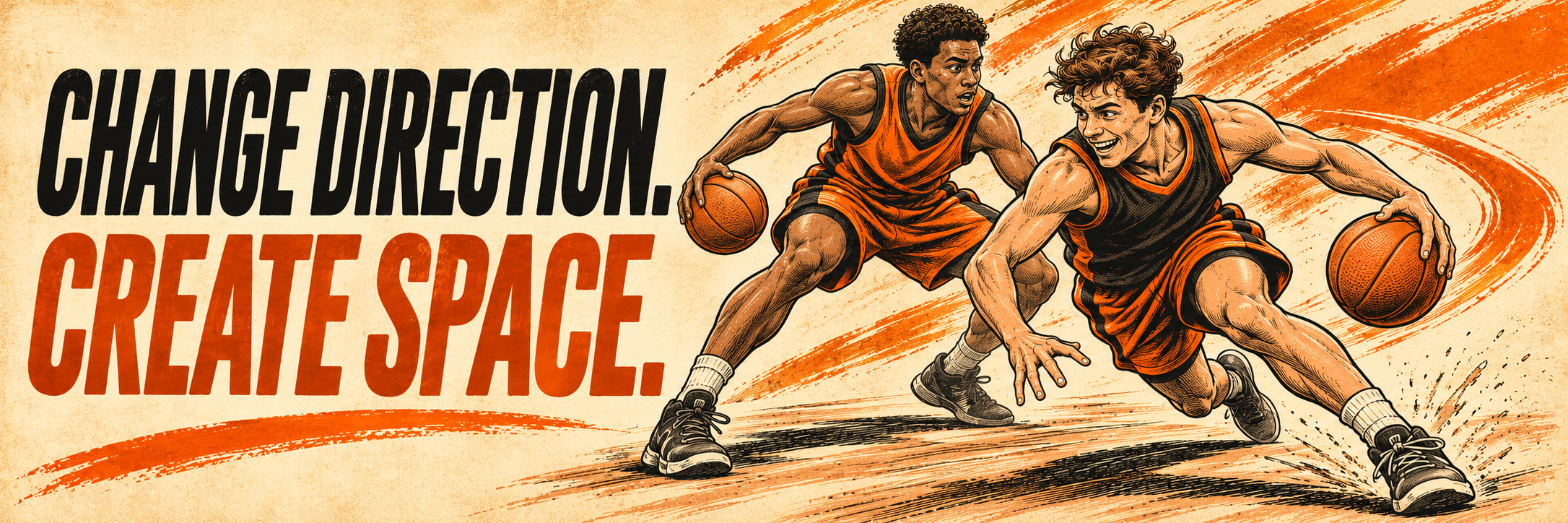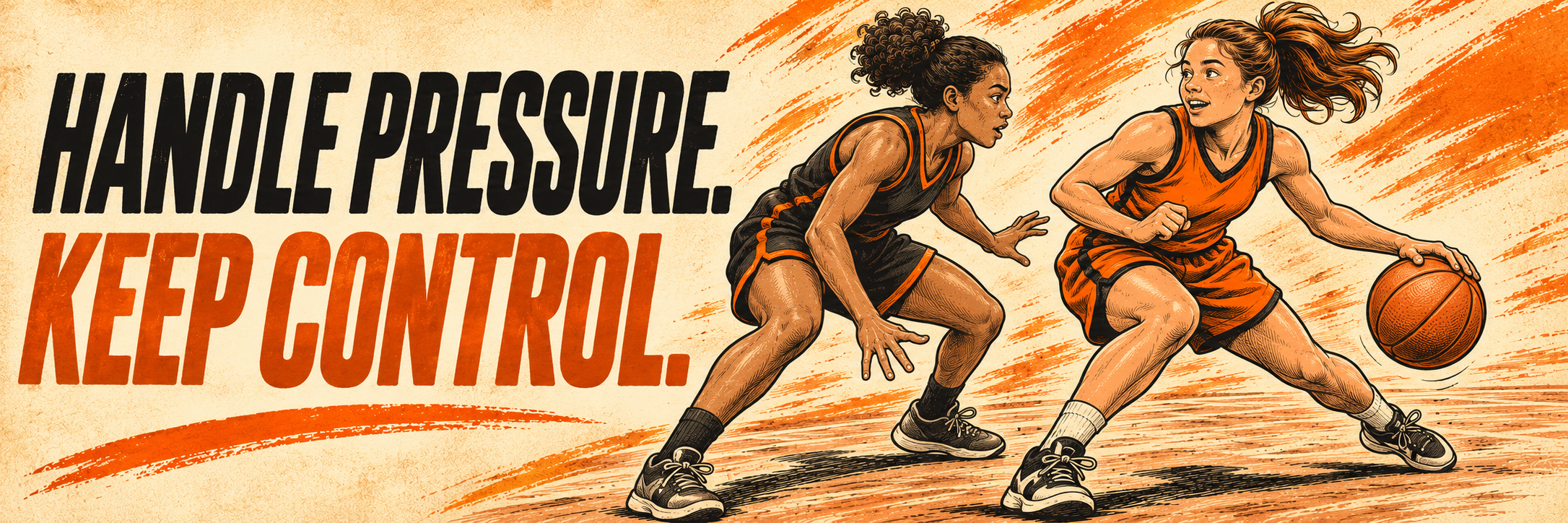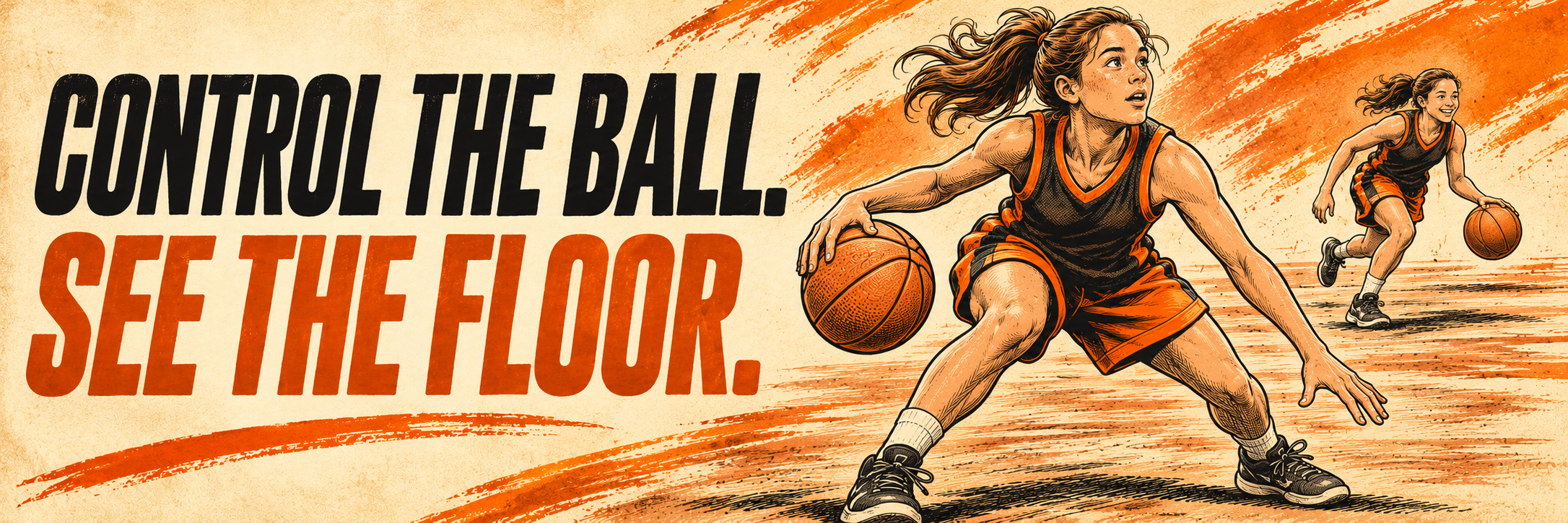
The dribble is a tool for creating an advantage. It helps a player protect the ball, change the pace, open a passing angle, or attack the basket. A long routine means very little if the player cannot see what comes next.
I begin with clear technique. Then I make the player look, recognize, and act. Control the ball while reading the floor. That is the standard.
Start beside the body
Build a balanced stance with knees flexed and the ball slightly forward and to the side of the dribbling leg. Spread the fingers. Push the ball with the arm and hand working together, rather than slapping at it with a stiff wrist.
Keep the hand in a legal position. The idea is a controlled, purposeful push, not letting the ball rest in the hand or carrying it. The player should be able to keep looking ahead.
1. Establish a stationary base
Start with a comfortable dribble around waist height. Work with each hand. Lower the stance and the bounce, then return to the original height without losing rhythm. Move the ball from slightly in front to beside the body.
Change one demand at a time. Ask the player to turn the head while continuing to dribble, or identify a coach signal ahead. If the ball becomes the only thing the athlete can watch, reduce the difficulty.
2. Connect height, rhythm, and memory
Give the player a short sequence, such as four higher bounces, two low bounces, and three behind the body. Begin slowly enough to execute each part cleanly. Then change the sequence.
Assign a number to each action and show the numbers instead of calling the whole instruction. This connects visual recognition to a dribbling response. Keep the available choices small until the athlete handles them reliably.
3. Take the dribble into space
Now move. Dribble forward, stop under control, and accelerate on a signal. Use both hands. Keep the ball clear of the feet and direct the movement toward useful space.
Do not tell every player to use the right hand just because they are on the right side. The defender determines where the ball needs protection. In open space, a longer push may help the player cover ground. Near pressure, keep the bounce short and responsive.
4. Learn the protective dribble
Flex the knees and put the body between the defender and the ball. Keep the free arm in a legal protective position, without pushing or holding. Move with control and keep the court in view.
Start with a guided defender. Ask the defender to stop or change position on a coach signal. The ballhandler must notice the opening and change pace instead of continuing the same pattern.
5. Make vision part of the skill
In REACT CRT, assign a small set of visual symbols to actions the player already knows. Place the display ahead at a comfortable viewing height. Show one cue at a time. The player identifies it while maintaining the dribble and performs the matching action.
Then bring back a teammate and defender. Reading a symbol creates a useful recognition task; reading a live player supplies the basketball problem. Practice both.
Know when to move on
Progress when the athlete can keep a balanced position, control both hands, and respond correctly without staring at the ball. Faster repetition is useful only while those standards remain.
Finish with a simple live task: protect the ball, recognize space, then drive or pass. Ask the player what the dribble achieved. If it created nothing, another dribble was probably not the answer.
Watch: Ballhandling with Coach Agmon
“Make each day your masterpiece.”