The next play starts in the hands
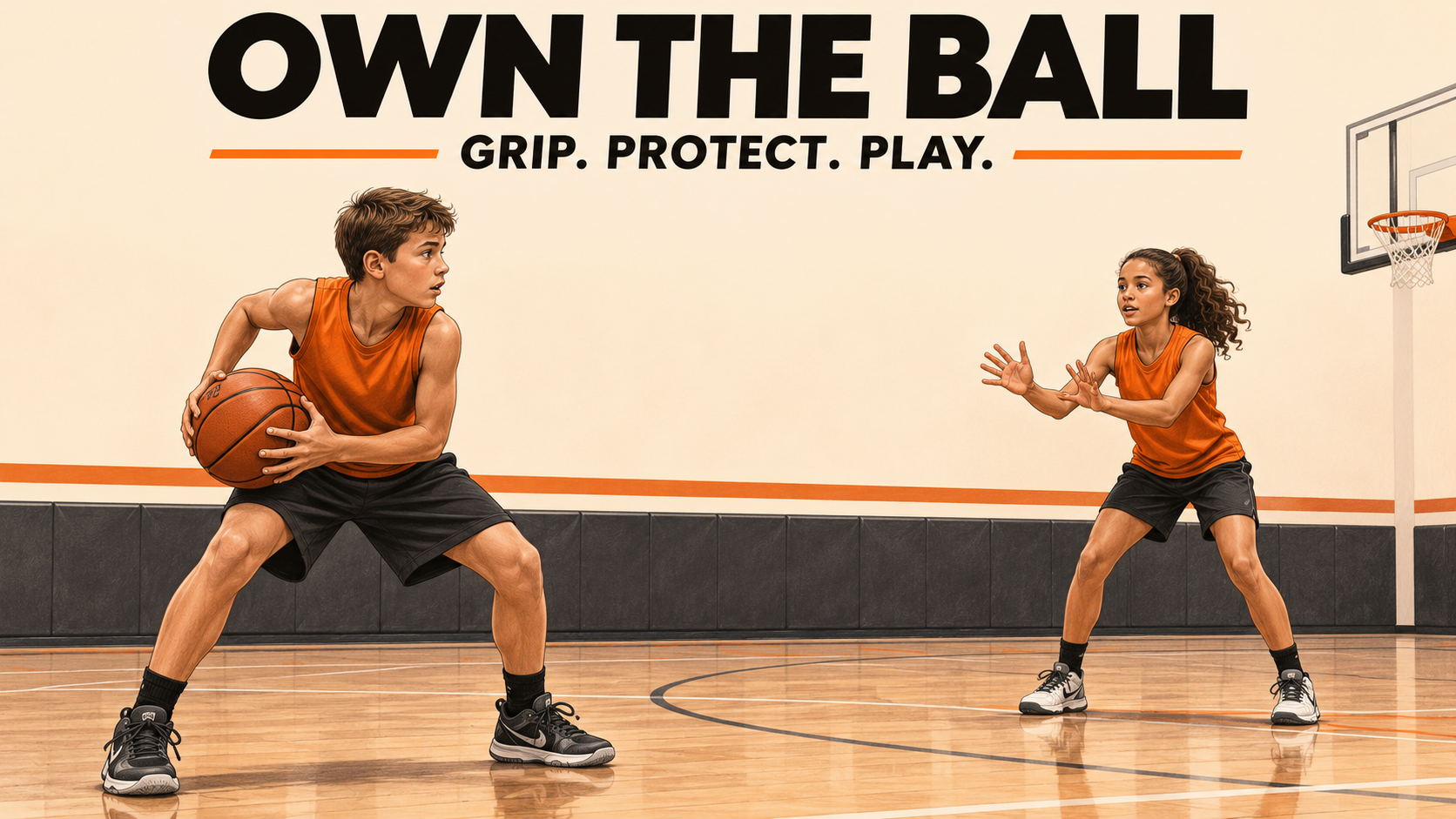
Before a precise pass, a protected pivot, or a confident shot, the player has to own the ball. Holding it should create options. If the eyes drop and the hands lock up, the next action is already late.
My starting point is practical: teach players to control the ball while looking at the game. Then change the situation and see whether that control remains.
Teach control without unnecessary tension
Use a ball the player can handle comfortably. Spread the fingers naturally and let the fingers actively control the ball rather than flattening it against passive palms. Hold firmly enough to keep control without squeezing so hard that the shoulders and arms stiffen.
Start with two hands and a balanced stance. Move the ball close to the body when protection is needed, using the body to separate it from the defender. Keep the elbows controlled and the eyes available for a teammate or signal.
Use these games to connect grip, protection, movement, and the next skill.
1. Hold, show, hide
Players hold the ball in a ready stance. On “show,” present it toward an imaginary receiver. On “hide,” bring it to a protected position beside the body.
Keep the head up throughout. Use slow, clear calls first; then vary the sequence. Count a point only when the player controls the ball and keeps balance.
2. Eyes up challenge
A partner stands in front and silently shows one to three fingers. The ballholder names the number while moving the ball from one protected side to the other.
Begin without moving the feet. Add a legal pivot after the player can process the visual information without checking the ball. Change the signal rule only after it is understood.
3. Light taps, strong control
One player holds the ball with two hands while a partner applies gentle taps to the ball. The holder keeps it under control for a short round.
The partner touches the ball only, without striking hands or pulling the player. Increase the variety of angles before increasing the speed. Stop the round if it turns into a wrestling contest.
4. Catch and keep your options
Pairs pass at a manageable distance. The receiver shows ready hands, secures the catch, and immediately looks back to the partner.
The passer then presents a target on either side. The receiver moves the ball into a position for that pass. Start with a predictable target and progress to a late choice.
5. Protect and pivot
A ballholder establishes a pivot foot. A defender provides light pressure and tries to touch the ball. The holder uses body position and legal pivoting to protect it.
Score one point for keeping possession through the short round with legal footwork. The defender earns a point for a clean ball touch. Reset the roles regularly and avoid swinging the ball at the defender.
6. Find the passing window
Use a ballholder, a receiver, and a defender. The receiver moves a few steps to offer a passing target while the defender blocks one angle.
The ballholder protects, pivots if needed, and delivers through the open window. Start with a stationary defender who clearly closes one side, then allow controlled movement.
7. Stop, secure, and choose
Players dribble through an open area. On the stop signal, gather the ball and arrive in a balanced position with legal footwork.
A second signal identifies a receiver to pass to. Separate the stop from the next decision at first, then shorten that interval. Do not reward a quick pass that follows a lost ball or an uncontrolled stop.
8. Keep possession, create the next play
Play a short two against one possession in a defined area. The attackers must secure each catch and protect it before choosing the next pass. Use the agreed pivot rule while holding the ball.
Award a team point for three completed passes without a drop, travel, or interception. Once that is reliable, add a route to the basket. Control should help the game move forward, not become a reason to hold the ball forever.
Coach one point at a time
If the ball keeps escaping, reduce the passing speed or the defender’s pressure. If the player looks down, simplify the movement and keep the visual target clear. If the feet lose control, rebuild the stop before adding another decision.
Ask whether the player can catch, protect, and make the next useful action. That connection is the measure of progress. The same sequence can serve a new player learning the basics or an experienced player repairing a specific weakness.
Use short rounds, frequent role changes, and a clear scoring condition. Teach the grip, then give it a job.
“Make each day your masterpiece.”