Teach the finish as part of the game
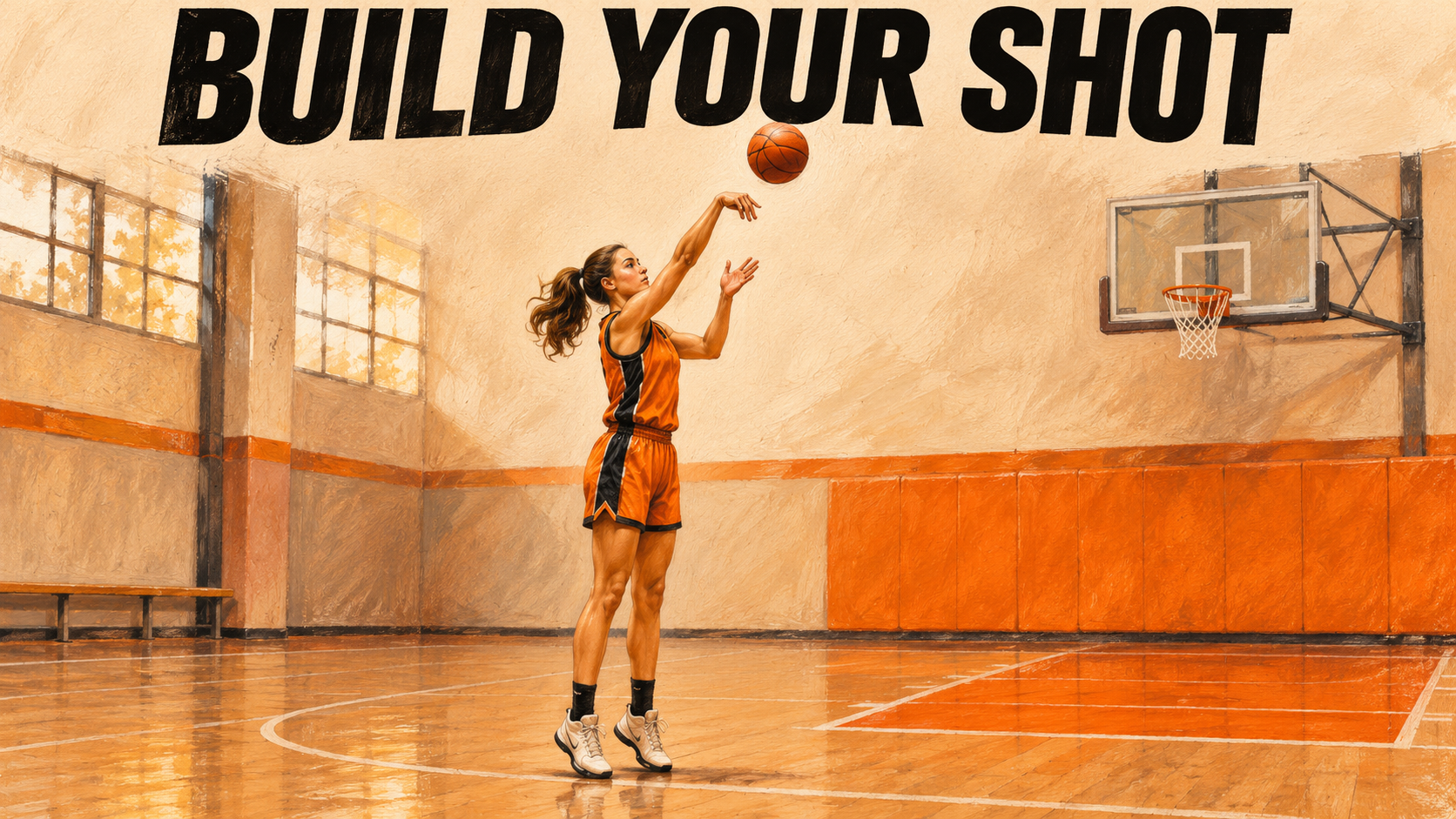
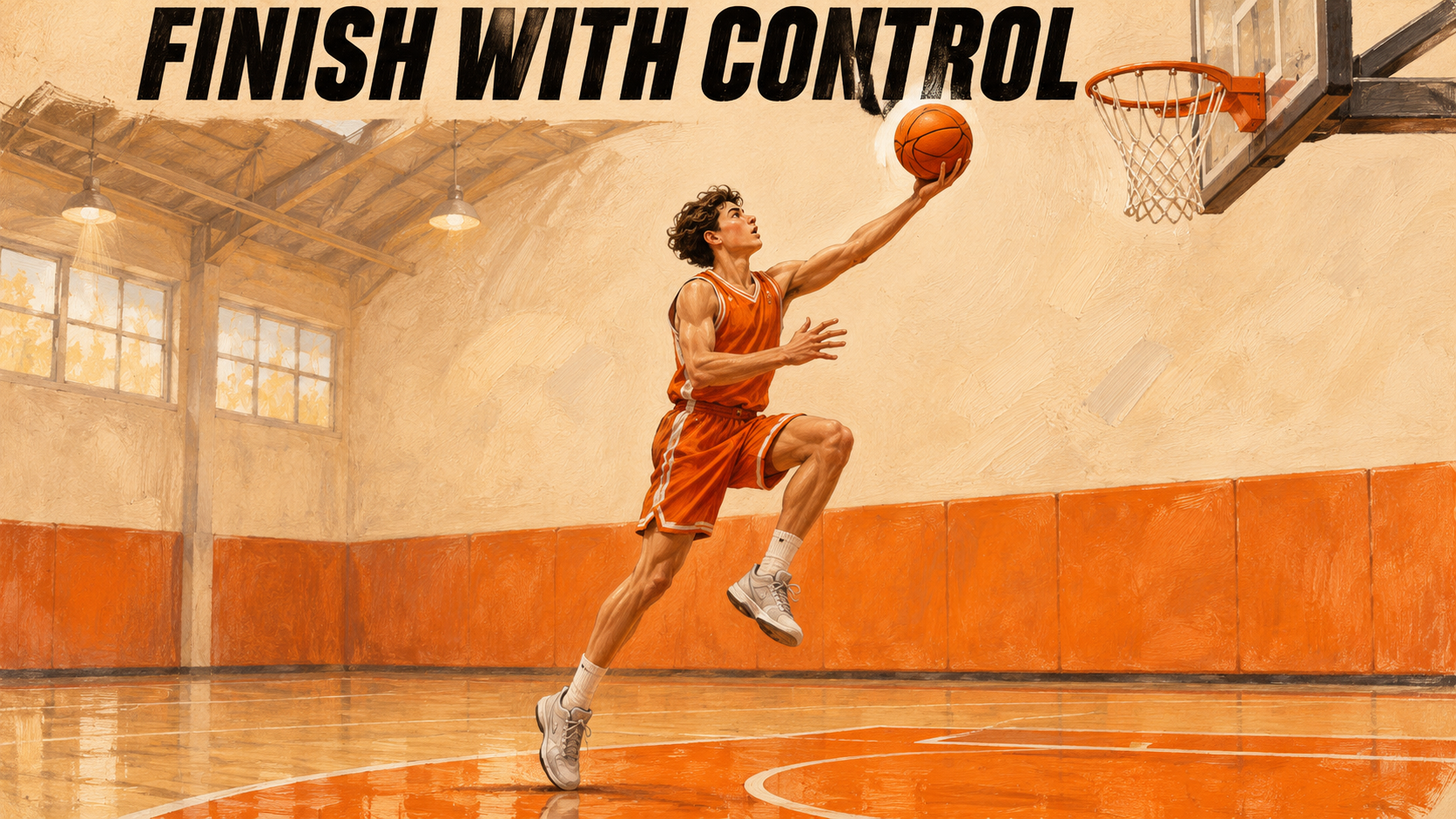
A layup connects the dribble to the basket. It brings ball control, timing, balance, lift, and touch into one action. That is why I teach it early, once the player can use an attacking dribble to move toward the rim.
I usually start with the whole movement. Show the action, let the player experience it, and then correct what actually breaks down. If we spend the entire lesson teaching separate pieces, players can lose the rhythm and purpose that make those pieces useful.
Five things have to work together
The player must gather the ball at a useful distance, organize the final steps, take off, release with the right touch and angle, and remain aware of the defender. A pass into the finish adds another timing problem: receiving the ball while moving.
Do not assume every miss is a shooting problem. A late gather can create a rushed release. An uncontrolled approach can carry the player past the target. Identify the first part of the action that loses control.
For a basic right handed layup, teach the familiar right, left foot rhythm, take off from the left foot, and lift the right knee with the shooting hand. Reverse the pattern for the basic left handed finish. Teach the gather and footwork under the rules used in your competition.
Why I use the component method
In my component method, I introduce solutions to the common difficulties before those difficulties stop the whole group. Players learn a small set of tasks, each with a clear purpose.
When a player struggles, I can send them back to the relevant task. One player needs release work. Another needs the gather. Another needs takeoff coordination. The group keeps working, and each player gets a useful correction. This also makes it easier to group players by their actual needs.
1. Find the touch close to the basket
Start close enough to reach the target without throwing the ball forward with the whole body. Balance the ball on the shooting hand and release toward the near upper corner of the backboard square. Work from the appropriate angle beside the basket.
If the player pushes horizontally because reaching the rim is difficult, reconnect the legs to the upward action. Bend and extend through the legs so the arm does not have to supply all the force. Reduce the distance or use an appropriate basket height when needed.
For a release that stops too early, rehearse an upward toss in clear space and finish the arm comfortably. Then bring that feeling back to the basket. The task is to reach upward with control, not force a stiff pose.
2. Connect the gather to a natural rhythm
My teaching task starts a few steps from the basket with a small self toss ahead. The player receives the ball and moves into the finishing steps. The toss gives us a simple way to work on when the ball comes under control.
Keep the toss short and manageable. Demonstrate the gather and legal footwork clearly. Once the player can coordinate them, connect the same rhythm to a slow attacking dribble.
If the steps become an awkward march, return to natural running rhythm. A player who is thinking about every joint may need fewer words and a clearer demonstration.
3. Make the takeoff go up
Some players leave the lifting knee behind or travel forward without gaining useful height. Rehearse the finishing step and knee lift away from the basket while holding the ball. Then add the release.
The knee and shooting hand rise together in the basic finish. Keep the landing balanced and give each player enough space. The purpose is coordinated lift, not the highest possible jump on every repetition.
4. Put the whole finish back together
Return to a slow dribble and a complete layup. Increase approach speed only when the gather, foot rhythm, lift, and release stay connected. Use baskets and traffic routes that keep players from crossing into each other.
At the beginning, I teach one side in a focused block rather than constantly switching right and left. Once the pattern is understood, teach the other side and build toward confident use of both. I also spread the initial learning across two sessions so the player has time to absorb it.
Both sides matter because the ball must be protected from the defender. A strong hand is useful. A finish that always exposes the ball is a problem.
Choose a teaching method for a reason
A long backward chain of release, knee lift, one step, two steps, and finally dribble can help isolate a difficulty. My concern is spending so much time there that the player never learns the flow of the action.
A sideways chase step approach can unlock the rhythm for a player who is stuck, but it is an intermediate solution. Bring the player back to the approach used in the game.
I avoid teaching the layup through bench obstacles. They do not solve the gather problem and can pull attention toward avoiding the obstacle. Floor hoops can also draw the eyes down. A teaching aid should solve the player’s difficulty and help them return to the game.
A playful route: the crocodile lake
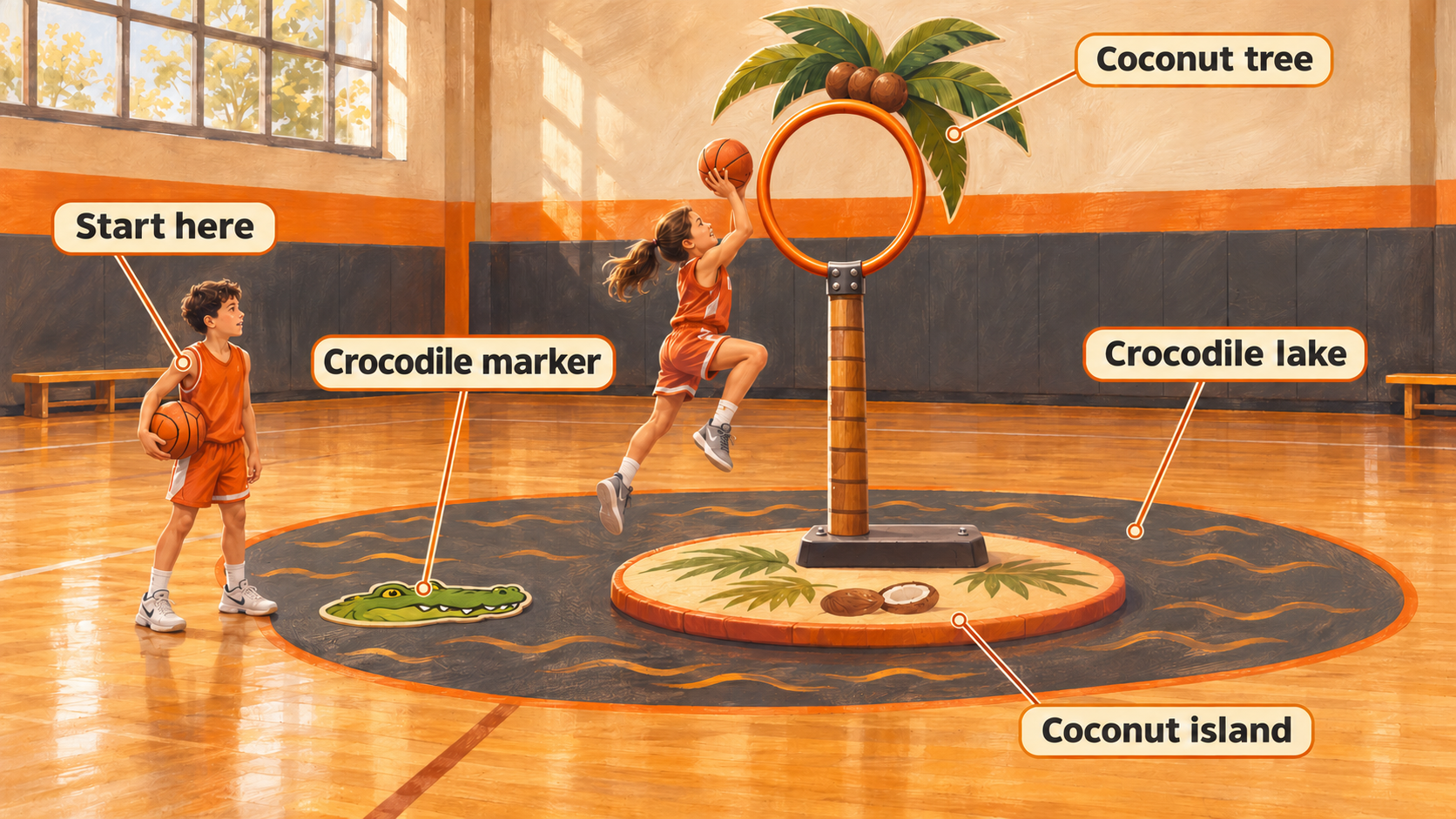
Beginners imagine crossing a lake to a coconut island. A flat crocodile picture marked a single foot contact, and an elevated hoop became the target for an upward finish. The story encouraged a step, a takeoff, and a reach without a long technical speech.
The illustration below shows the idea. In practice, use secure equipment, flat nonslip markings, a suitable target height, and clear landing space. Keep the imagination; organize the equipment so the player can move freely.
Then give the finish a basketball reason
Once players control the basic layup on both sides, add different approaches, ball protection, reverses, changes of rhythm, and a defender. Each variation needs a reason connected to the defender’s position.
These variations come after the basic finish is reliable on both sides. I also use a second jump and finish after the rebound to encourage upward lift and readiness for the next action.
Coach the difficulty you can see. Repair that component, reconnect the movement, and put it back into a situation where the player has to use it.
“Make each day your masterpiece.”