Run to create a better shot
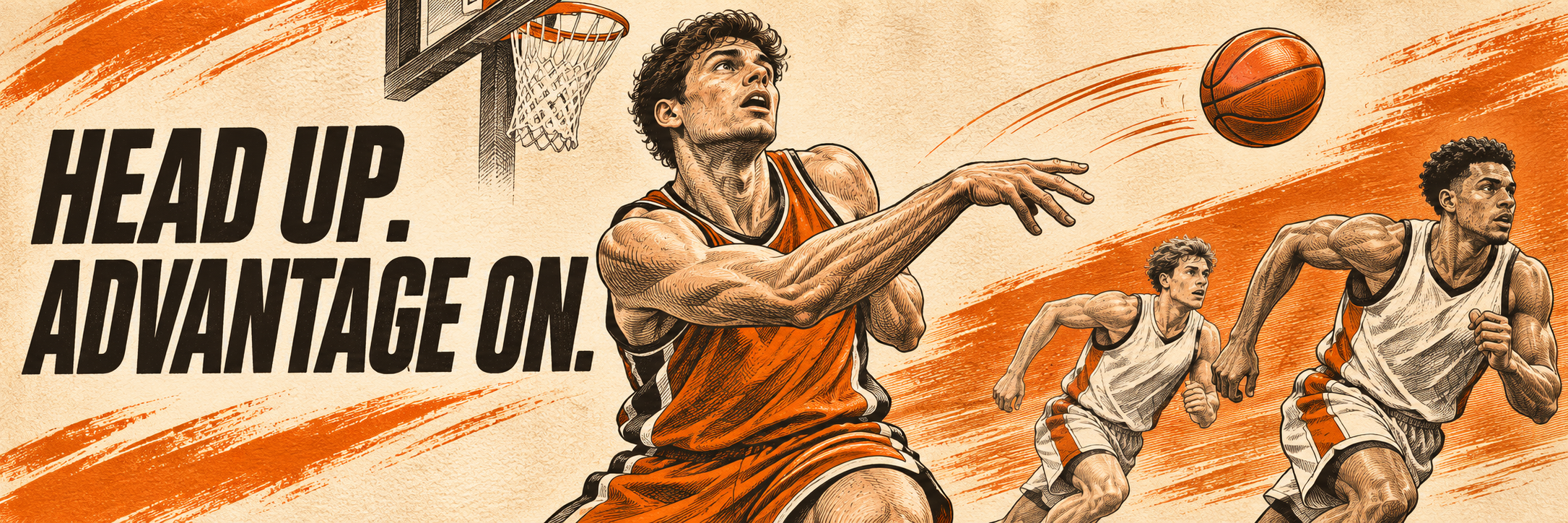
My offensive objective is to create open, easy scoring opportunities. A numerical advantage is one route to that objective. It can happen in transition or inside a settled offense.
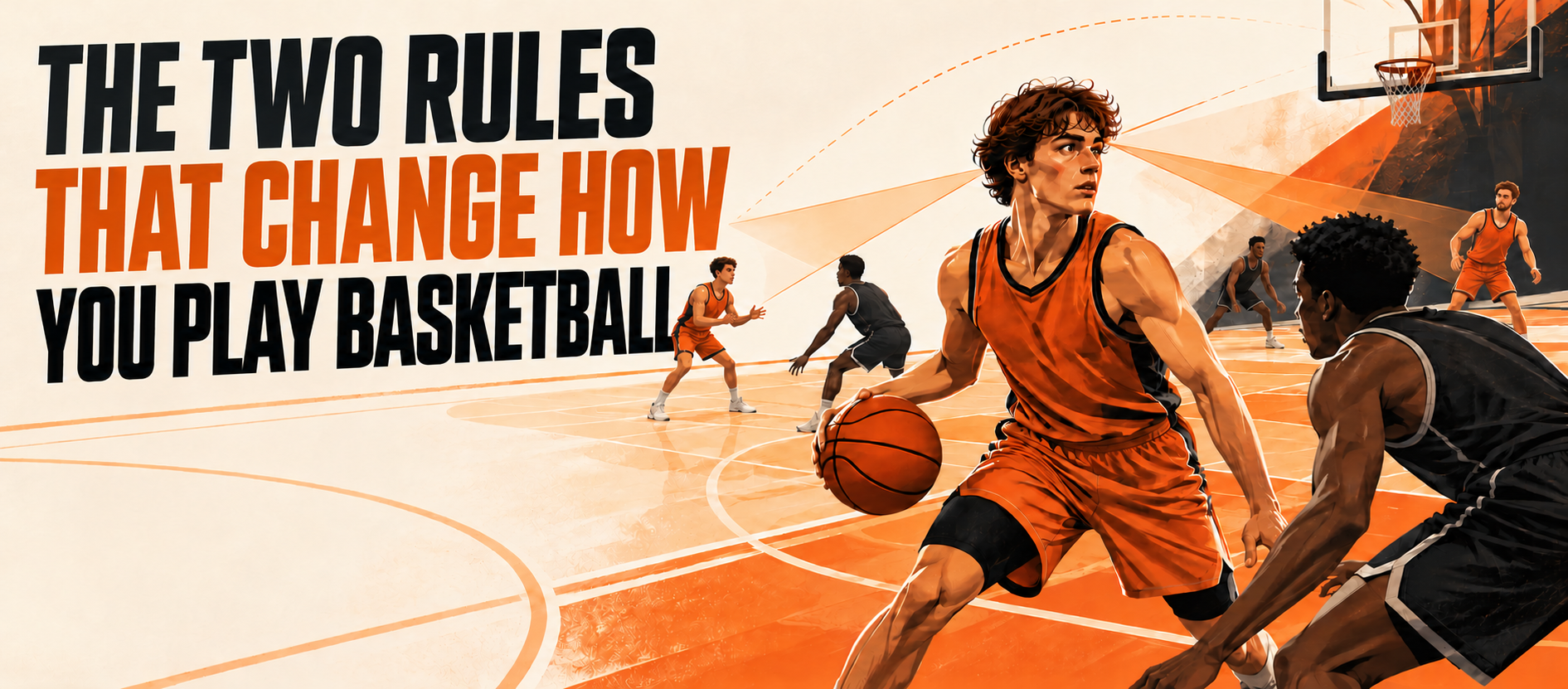
The first rule is the same: head up when you receive the ball, before you decide to dribble, pass, or shoot. We have to train that habit. Ball control is only part of game control.
The ability to see the situation, interpret it, and respond is central to my work with REACT CRT. “Lift your head and discover WONDROUS WORLDS” is also the idea behind the title of my book.
The break begins with defense
Pressure on the ball, help, and useful positioning in the passing lanes can force a difficult shot or a turnover. Finish the defensive possession with the rebound.
Make legal contact to establish the box out, keep the opponent away from the ball, then pursue it. Once the rebound is secured, protect it and lift your eyes immediately.
The rebound ends one possession and starts the next. An automatic dribble with the head down can erase a passing opportunity before the player has even seen it.
Open the floor as the ball is secured
The other players must move as the rebounder gains control. Open the sidelines, offer a clear outlet, and threaten the basket. The spacing should make the defense cover distance and choose which threat to stop.
Whether you use fixed lanes or broader running principles, teammates need to understand one another’s movement. Speed without usable passing angles gives the ballhandler fewer options.
Four options for the first action
The first delivery is critical. The rebounder can find the point guard at a familiar outlet spot, make a short pass to the guard on the same side, pass ahead to the opposite guard running toward the rim, or advance the ball personally.
Yes, a big can lead the break. If that player can control the ball, keep the head up, and cover ground with a few effective dribbles, waiting for a guard can waste the advantage. Develop the skill before giving the responsibility.
The outlet is a decision. Teach the player to recognize which option is actually available.
Attack the defender’s decision
A numerical advantage is valuable only when we use it. Draw a defender, deliver the pass on time, and make the simple finish. Sometimes one more pass turns an available shot into an easy shot.
A recovering defense may not be outnumbered, but it can still be unbalanced. A controlled drive can pull help inside and open the pass outside.
Do not reward a difficult shot simply because it looks impressive. The purpose of the break is to arrive at a better opportunity.
You can run after a made basket
A quick inbound can attack a defense that relaxes after scoring. That window requires its own preparation: who retrieves the ball, who receives it, how the floor opens, and how quickly the ball returns to play.
The energy after conceding a basket can differ from the energy after a stop. Train the response instead of expecting it to happen automatically.
I generally prefer a guard to make the inbound, with the point guard available to receive. The choice should serve your personnel and the speed and accuracy of the first pass.
When I want to run
Look for the advantage after a steal, a clean defensive rebound, or a missed free throw. A long rebound may open a different lane from a short rebound. Read the floor instead of assigning every rebound the same answer.
A quick legal restart after the ball goes out, a slow retreating opponent, or a defense that needs time to establish its special coverage can also create an opening.
Sometimes the score and clock demand more possessions. Sometimes the purpose is to impose a pace that suits our players. In every case, connect the decision to the game.
When I want to slow down
I may slow the game to protect a lead, use the clock, exploit an interior strength, attack an opponent in foul trouble, or work through our organized offense. If no useful advantage exists, we do not have to force the break.
If the player who wins the ball cannot safely lead the attack, find the appropriate ballhandler. If the opponent is benefiting more from the pace, change it. If the game becomes disorganized and turnovers multiply, restore the structure.
For an underdog, extra possessions can also give a stronger opponent more opportunities to establish its advantage. That is a strategic consideration, not a promise that a slower game produces an upset.
Pace should involve the whole roster. A running game can reduce the contribution of players whose strengths require a different offensive environment.
Should the break end with a three?
It depends on the shooter, the space, and the game. An uncontested three can be a good decision. Strategically, I still want players to recognize the easy finish near the basket before giving up that advantage for distance.
The ballhandler must understand who is best positioned to finish. In many teams, the point guard receives most of these decisions. Give that player clear principles and teammates who create real options.
Test the pace in practice
After the warmup, use a continuous transition drill such as the familiar 11 player drill. Track 10 consecutive attacks: baskets, turnovers, and poor shots.
In my coaching approach, four or five baskets with only one turnover is an encouraging indication that the group can handle that pace. It is a practical coaching reference, not a validated universal threshold.
Repeat the check across several rounds and practices. A single run of 10 possessions can mislead. If the same problems persist, improve the passing, movement, and decisions before making speed the foundation of the offense.
A running game needs technique, physical capacity, composure, shared decisions, and discipline. Measure what the pace actually produces for your team.
Watch: Passing on the fast break
“Make each day your masterpiece.”